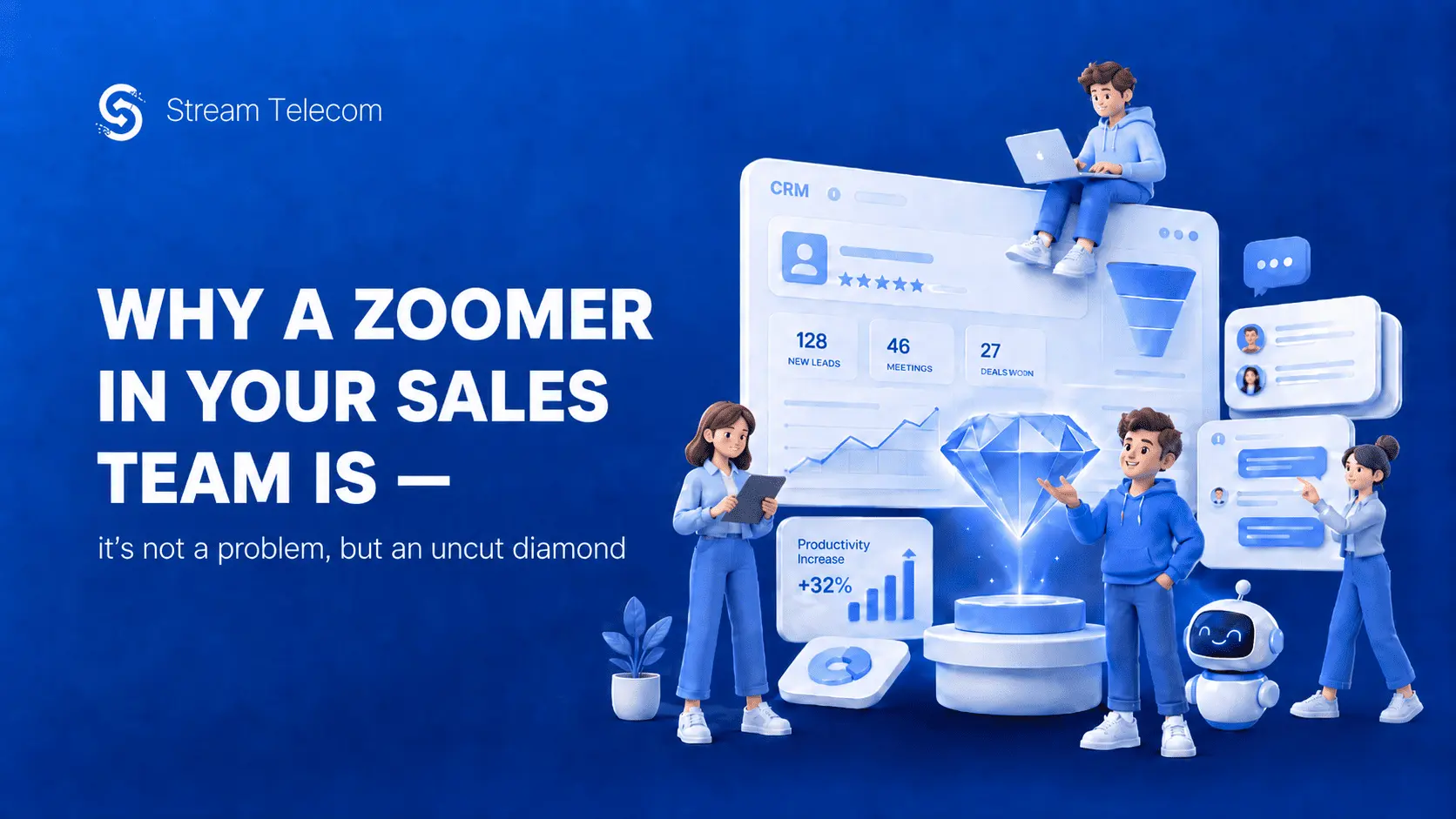
Why the Gen Z rep on your sales team isn’t a problem — they’re a diamond in the rough
Is talking to Gen Z getting harder? You’re not alone. Year after year, millennial managers keep voicing the same complaints about their younger colleagues: they don’t want to redo work, they ask too many questions, and they don’t react to feedback the “right” way.
This article is for you if you’re a millennial, a manager, and you work in sales. And this time it’s not another consultant with a PowerPoint deck talking. This piece was written by a team that works side by side with Gen Z every single day and knows exactly how they communicate, make decisions, and sell. And yes — there are hacks here that actually work.
Hack #1: Stop doubting Gen Z’s intelligence
This is the baseline. The biggest mistake millennial managers make is starting from a place of doubt, subconsciously: “young means inexperienced, inexperienced means they don’t get the nuances of sales.” Then they’re surprised when the person shuts down and stops taking initiative.
Here’s the thing: Gen Z grew up in an information environment where access to knowledge wasn’t limited to corporate training programs. From childhood, they’ve been sorting truth from noise, analyzing sources, and switching between contexts fast. That doesn’t automatically make them sales experts, but it does mean that default distrust kills motivation faster than any lost deal ever could.
What to do instead: enter the conversation assuming competence. Not “show me what you’ve got,” but “walk me through how you see it.”
Enter the conversation assuming competence. Not “show me what you’ve got,” but “walk me through how you see it.”
Hack #2: Give them room to show what they can do — you’ll be surprised
The classic sales management model — “do it the way I showed you” — works worse for Gen Z than “here’s the goal, here are the resources, figure out how to get there.” This isn’t about laziness or rebellion. It’s that a generation raised on YouTube tutorials and their own TikTok side hustles is used to non-linear problem-solving.
Give your Gen Z rep the freedom to experiment with their own approach to a client — even if it looks nothing like your tried-and-tested script. Often you’ll find they build client communication through content, an informal tone, or unconventional channels — and it converts better than expected.
The first two weeks feel nerve-wracking. Then the report comes back with results you wouldn’t have expected even from more experienced colleagues.
Hack #3: Feedback is a dialogue, not a verdict
Millennials grew up with hierarchical feedback: the manager speaks, the report executes. Gen Z responds better when feedback is a two-way conversation — one with room for “why exactly this way” and “what if we tried it differently.” This isn’t disrespect for authority; it’s a need to understand the logic behind a decision, not just follow instructions.
Try this: swap the monologue “here’s what you did wrong” for the question “how would you rate this result yourself?”
Often, Gen Z will name the problem more precisely than you could have put it yourself.
Hack #4: Meaning matters more than the KPI spreadsheet
This doesn’t mean Gen Z doesn’t want to hit their sales targets. They do, very much so. But “just hit the number” is a weaker motivator than “here’s how your result affects the team / the product / the client.” Explain the context — why this particular deal, why this particular client matters — and engagement rises noticeably.
Hack #5: Flexibility is an investment, not a concession
Hybrid schedules, communication formats, work pace — for a millennial, these often look like preferences. For Gen Z, they’re a baseline condition for productivity. If you can offer flexibility without hurting results, offer it.
Flexibility isn’t a manager’s weakness — it’s smart management of the resource your report actually is.
Hack #6: Give Gen Z an AI tool — and watch them shine
Gen Z is the first generation to integrate AI into everyday work almost instantly. For them, it’s not some scary novelty — it’s just a normal tool you can hand routine tasks to and get results fast.
Example: Stream Telecom’s cloud AI contact center automatically transcribes every call, scores the likelihood of closing a deal, analyzes customer sentiment, and suggests next steps to the rep right after the conversation ends. Instead of the manager manually listening through recordings, both sides get ready-made analytics: where the script needs tweaking, at what point the client “cooled off,” and which phrases actually work.
Don’t be surprised if, within a week, they bring you their own analytics insights faster than you can open the report yourself.
Bonus: a Gen Z glossary for the millennial manager
So you don’t feel lost in a meeting when your report says something you don’t understand — here’s a short glossary of the most common terms.
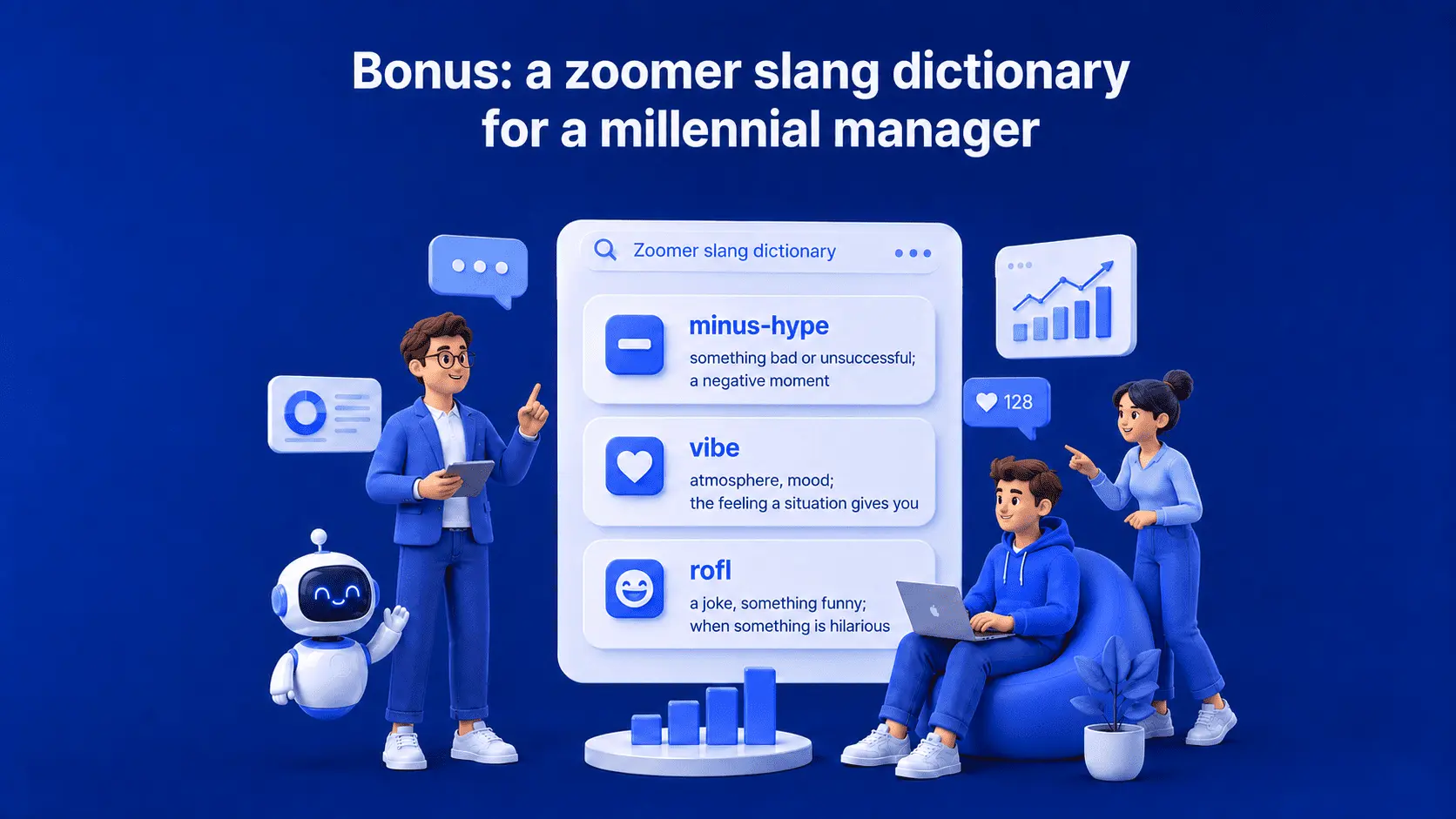
- mid / negative vibe — something’s ruining the mood or the atmosphere. “This client keeps rescheduling calls, such a vibe kill”
- cringe — secondhand embarrassment for someone, or over something awkward
- lol’ing / not being serious — joking around, not taking something at face value. “Are you for real?”
- it’s a given — something obvious, an undeniable truth, nothing to argue about
- hype — buzz, heightened attention around something
- it’s a vibe — something pleasant, great. Can apply to a work process too
- triggering — provoking a strong emotional reaction, usually negative
- flexing — showing something off proudly, bragging about a result
- easy / no big deal — a task that isn’t difficult
- blowing it off — deliberately ignoring something, not giving it weight
Bottom line
The Gen Z rep on your sales team isn’t a “broken generation” — they’re a colleague with a different set of strengths: fast adaptation, non-linear thinking, comfort with new communication channels. Stop treating them like an inexperienced intern, give them room to show what they can do — and there’s a good chance this is the person on your team who surprises you the most.