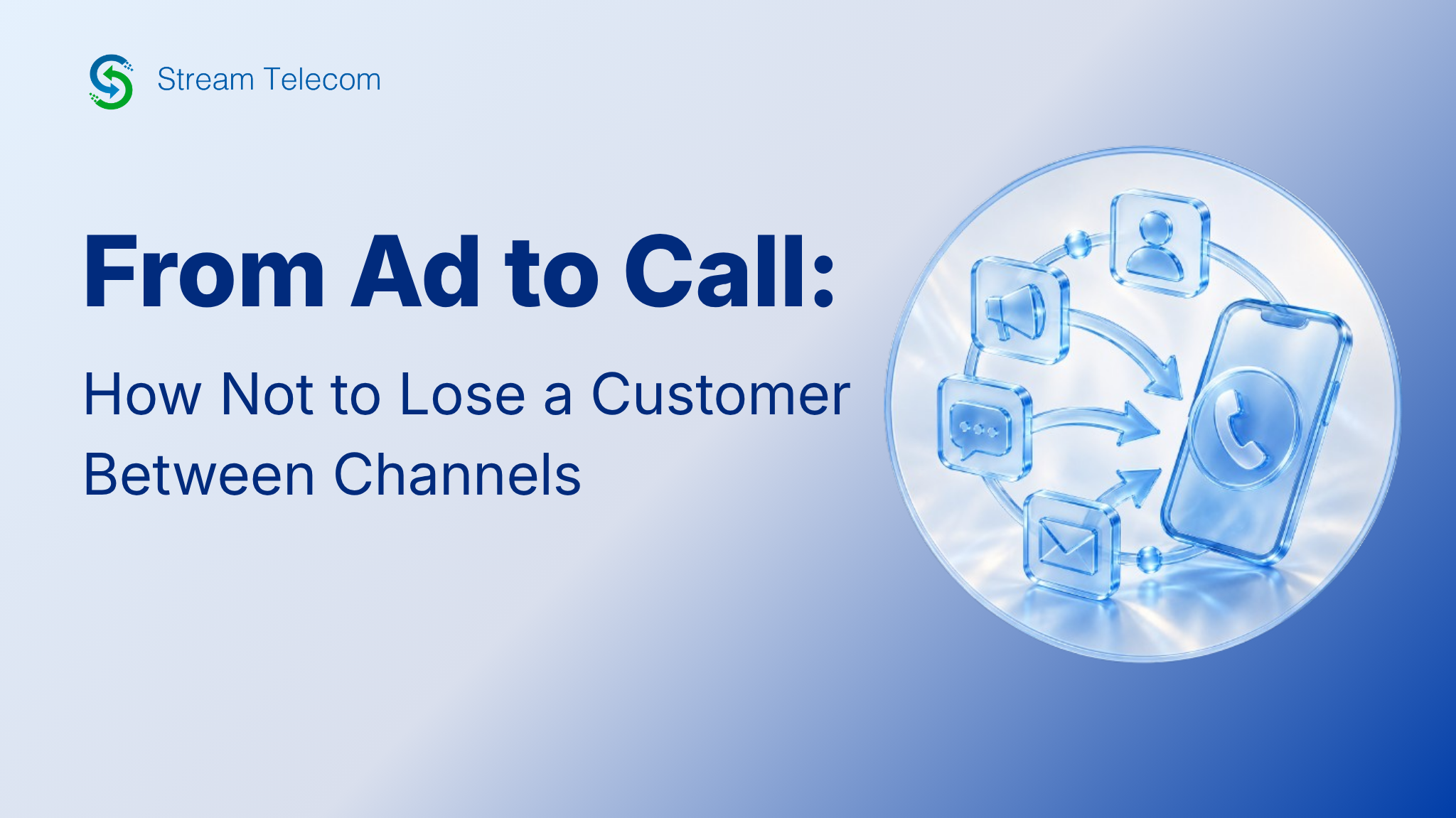
From Ad to Call: How Not to Lose a Customer Between Channels
A customer sees an ad on Instagram, visits the website, asks a question in the chat, and calls the company the next day. To them, it’s one conversation with one brand. For the business, it’s often several separate contacts that aren’t connected to each other at all.
The manager taking the call doesn’t know the person already asked about a specific service. The marketer sees the traffic from the ad but doesn’t know whether it ended in a sale. And the customer has to explain again who they are and what they need.
This is exactly the problem an omnichannel approach solves.
Omnichannel isn’t just about having many ways to contact a company. It’s one continuous conversation, even as the customer moves from one channel to another.
Many channels isn’t the same as omnichannel
A customer might call, message on a messenger app, or use the website chat. But if the information isn’t shared between these channels, the customer essentially starts the conversation over each time.
That’s the difference between a multichannel and an omnichannel approach. In the first case, a business simply offers several ways to get in touch. In the second, context is preserved no matter where the next contact happens. In an omnichannel model, the manager doesn’t have to piece the context together — they see what’s already been discussed with the customer, what was agreed, and what needs to happen next.
Good service means the customer doesn’t need to remind the company of their previous communication every time.
Customer switched channels — context stayed intact
The problem becomes especially noticeable when a customer moves from chat to a phone call.
For example, they already submitted a request and talked with a manager, then call a few days later to clarify the terms. If telephony is integrated with the CRM, the call becomes a continuation of the previous interaction rather than a new inquiry.
Integrating a virtual PBX with a CRM makes it possible to log calls together with other customer data and set up call-routing scenarios. For instance, a returning customer can be routed to the manager who already worked with them — without unnecessary explanations or handoffs between staff.
If the customer does need to be transferred to another manager, call recordings help quickly restore the details: what was already discussed, what questions came up, and what was agreed.
This way, a change of channel or of the responsible employee stays an internal company process, not a problem for the customer.
Which ads actually lead to sales
For marketing, omnichannel has another advantage: it helps evaluate not individual clicks and inquiries, but their contribution to sales.
Without tracking phone inquiries, part of the advertising results may simply never reach the analytics. The marketer sees campaign spend and website visits but doesn’t always know how many calls the campaign generated or what happened with those inquiries afterward.
Properly configured call tracking makes it possible to determine which campaign, channel, or ad was the source of a call. Combined with CRM data, this allows evaluating not just the number of inquiries, but their quality — which sources bring in customers who actually reach a deal.
As a result, marketing and sales end up looking at the same metric — not just the number of leads, but the real contribution of each channel to sales.
The next contact should also be part of the system
Omnichannel matters not only when a customer switches from one channel to another. It also shapes what happens after each interaction.
If a manager has already discussed terms with a customer, there’s no point sending them a standard message as if the conversation never happened. If the person asked to be contacted next week, that should become the next action — not get lost among other tasks.
So it’s important not just to keep a history of contacts, but to use it for further work: understanding who should reach out to the customer, when to do it, and which channel would be appropriate.
True omnichannel begins where every new contact takes the previous one into account.
Not more channels, but a better path to purchase
For the customer, all these contacts are one interaction with the company. It’s good when, inside the business too, they don’t fall apart into separate calls, requests, and records in different systems.
Then marketing understands what really leads to sales, the manager sees the context, and the customer doesn’t have to start over every time. An omnichannel approach helps bring this whole path together into one continuous story — from the first inquiry to the deal.
If today your customer data is stored separately in telephony, CRM, and advertising analytics, the Stream Telecom team can help combine these tools into a single communication and sales system.
Contact Stream Telecom — we’ll help you choose a solution for your processes and set up omnichannel customer interaction.
Recommended articles
7 Takeaways From an Analysis of 70 Million Phone Calls: What Businesses Lose on the Phone
Read article
When demand grows faster than sales: how to scale customer communications
Read article