Marketing and Sales: Why They Still Work Separately and How to Fix It
Marketers report hundreds of new leads, while the sales team responds: “The leads are low quality.” Managers complain there aren’t enough prospects, marketing counters that inquiries aren’t handled on time. The company increases its ad budget, but sales barely grow. Sound familiar?
The problem isn’t always the ads, the managers, or lead quality. Often the real cause is that marketing and sales work with different data, measure success differently, and don’t see the customer’s full journey.
A high lead volume alone doesn’t prove marketing effectiveness. What matters is understanding which inquiries actually turn into sales.
Why conflicts arise between marketing and sales
Each department evaluates its own part of the process.
Marketers typically analyze:
- number of inquiries;
- cost per lead;
- ad campaign performance.
Sales teams care about:
- inquiry quality;
- conversion into deals;
- revenue generated.
As a result, both teams can show good numbers in their own reports while the company’s overall results remain unsatisfactory. To understand exactly where the business is losing customers, you need to combine data on advertising, inquiries, and sales.
Call tracking shows which ads bring in customers
Not every prospect fills out a form on the website. Some people call directly, so without call tracking, marketing only sees a fragment of the real picture.
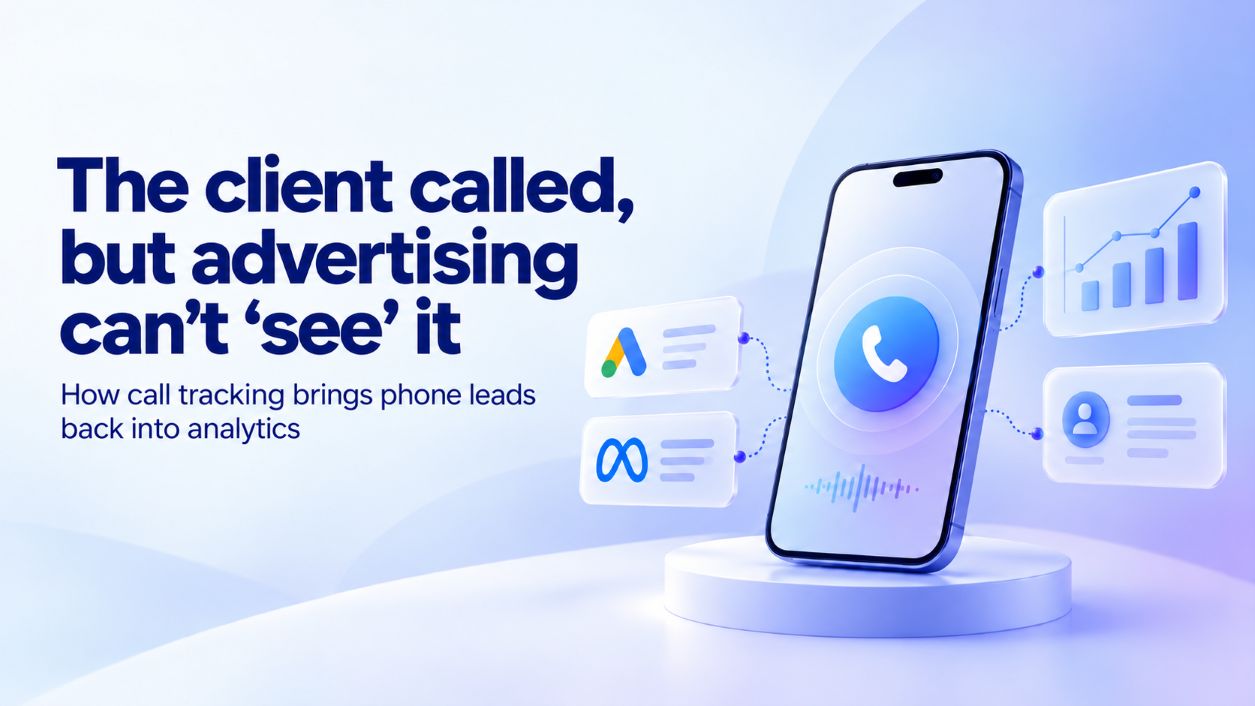
Call tracking identifies which ad, campaign, or channel each call came from. This lets marketers evaluate not just click volume, but actual prospect inquiries.
Sales, in turn, can give feedback on the quality of those inquiries. If a channel generates a lot of calls but rarely leads to deals, the ad strategy needs to be reconsidered.
CRM brings customer information together
Call tracking shows where a call came from, but that’s not enough to evaluate results. It’s also important to know who handled the inquiry, how the conversation progressed, what stage the deal is at, and whether it closed.
When this data lives in different spreadsheets, messengers, emails, and managers’ personal notes, marketing and sales each see only fragments of the customer journey. Information gets lost, inquiries go unanswered, and it becomes hard to assess how effective ad channels really are.
Stream CRM brings inquiry data and subsequent prospect work together into a single system.
It shows:
- the source of each lead;
- the communication history with the customer;
- the current deal status;
- the responsible manager;
- the outcome of the inquiry.
Marketing gets the ability to trace the customer’s path from ad channel to purchase, while the sales manager can monitor the speed and quality of inquiry handling. This helps identify weak points in the funnel and make decisions based on facts.
Call recordings explain why customers don’t buy
Sometimes ads bring in targeted inquiries, managers respond on time, but conversion stays low. A standard report won’t show what happened during the conversation:
- did the manager identify the customer’s needs;
- did they explain the product clearly;
- did they handle objections.
Real customer communication can be evaluated through recorded phone calls. A manager can spot recurring mistakes, review difficult situations, train new employees, and monitor service standards.
Call recordings are useful not only for the sales manager but for marketers too. During calls, customers voice their needs, doubts, and reasons for declining. This information can be used to improve ad messaging, offers, and content.
Conversations with customers reveal not just how sales is performing, but how well marketing actually understands its audience.
How to align marketing and sales
Technology alone isn’t enough. Teams need to agree on what counts as a quality inquiry, how quickly a manager should respond to it, and what data should be recorded after each contact.
Regular information sharing helps answer key business questions:
- which ad channels drive the most sales;
- at what stage the company loses prospects;
- why people decline to buy;
- how to increase conversion without constantly raising the ad budget.
When marketing and sales work from shared data, mutual blame gives way to shared responsibility for results.
Call tracking, CRM, and call recording help reveal the customer’s full journey, find bottlenecks in the funnel faster, and make decisions based on real data.